Galway-based Katarina Hruskova is determined to give more value to Irish farmers by processing their sheep’s wool. After opening Woolstore in 2024, a wool washing and processing business, Katarina is now looking to increase the capacity of her mill and start spinning wool into yarn.
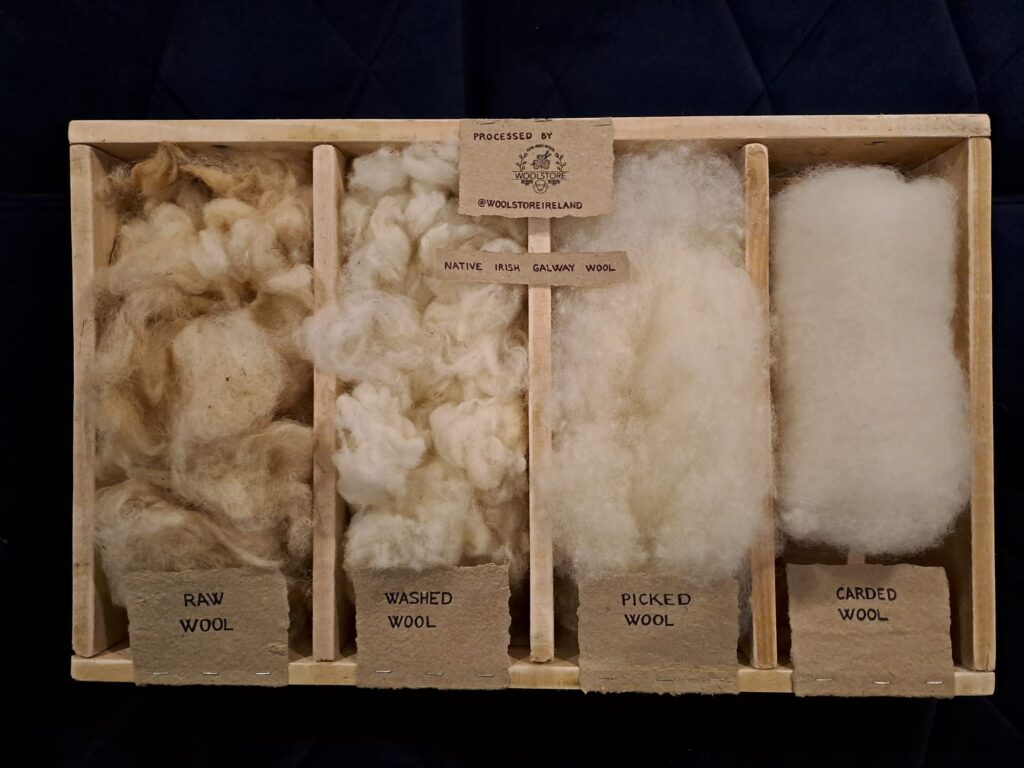
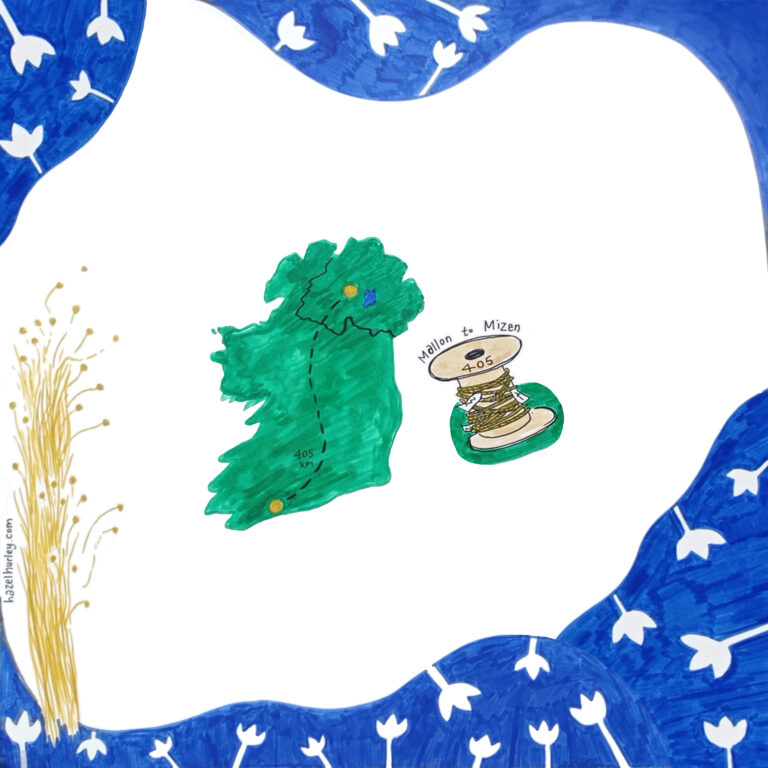
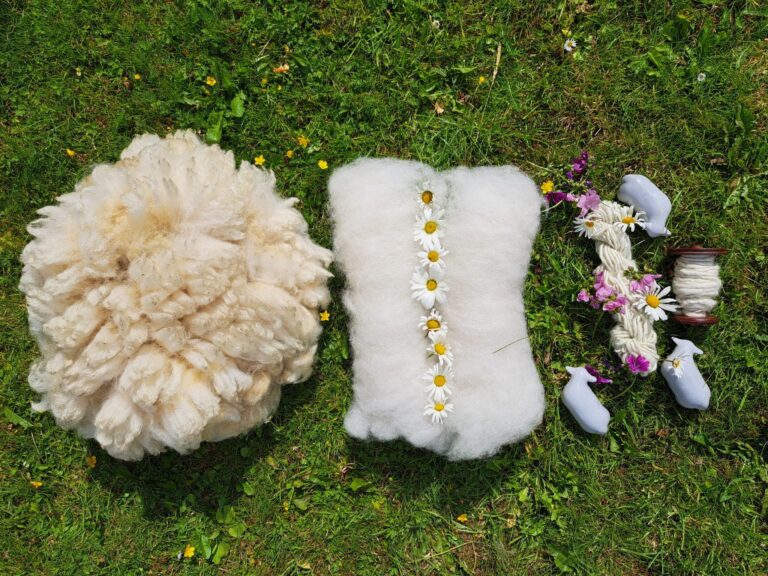
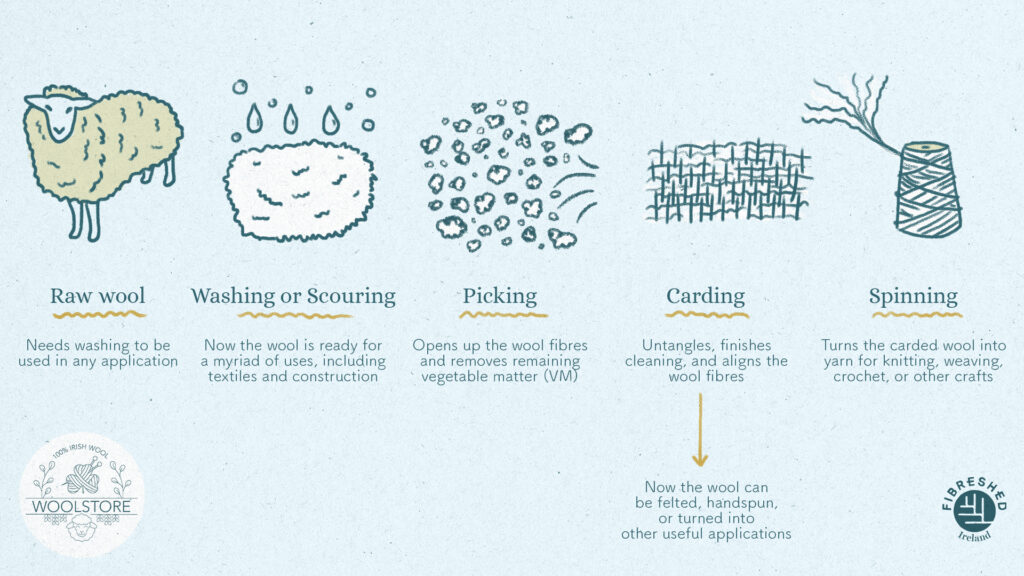
With shearing season fast approaching, it’s common to hear sheep farmers all around the island commenting on how this is a loss-making exercise because the wool they produce is deemed worthless. As sheds around the country burst with tonne bags full of rotting wool, a recently-released report has highlighted the lack of washing and small-scale processing facilities as the main bottleneck preventing the development of innovative uses to the national clip. Meanwhile, Woolstore’s small but efficient operation has proven successful in washing, picking, and carding wool for local armers and textile crafters. Indeed, 200kg of Galway wool processed by Woolstore made it all the way to Texas last year, where it was spun by a local mill and is being sold as a specialty yarn. An installation made out of Irish-grown wool processed by Woolstore can be currently seen at the Irish Museum of Modern Art, as part of Cecilia Vicuña’s exhibition Reverse Migration.
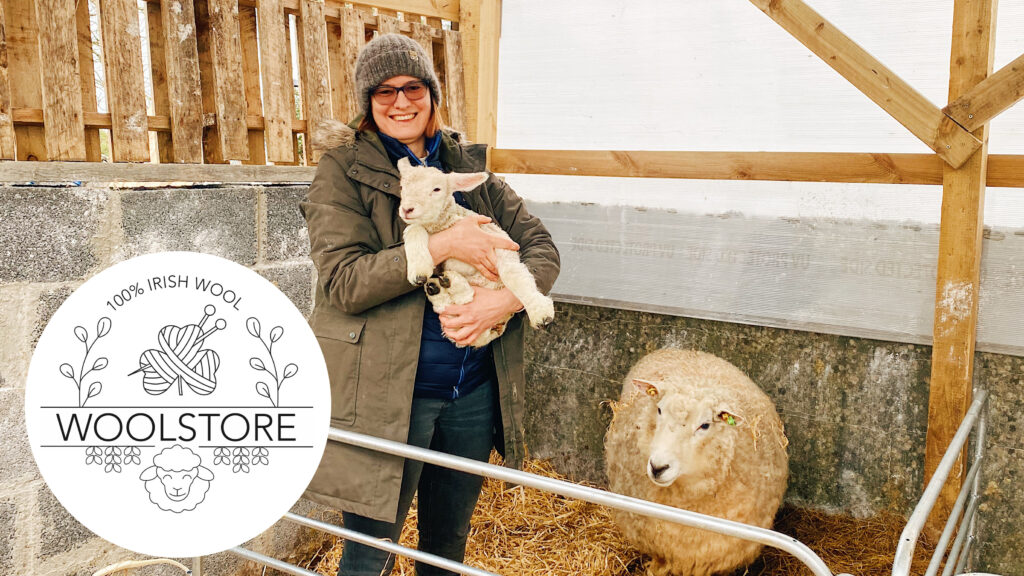
As the only mill in Ireland that accepts flexible batches of wool to be washed and carded, Katarina Hruskova’s business provides direct access to an opportunity that farmers and independent designers would not be able to access otherwise. She remarks, “One of the biggest drivers for me is showing people how good Irish wool is. I love seeing the look on farmers’ faces when they get their wool back after being processed, seeing the difference, and starting to understand the quality of what they actually have!”
It is this passion for demonstrating the potential of Irish wool that has led Katarina to pursue the next milestone in her business: increasing scouring capacity and acquiring Woolstore’s own semi-worsted spinning machine. The ambition is enthusiastically welcomed by farmers and textile practitioners who have been calling for viable avenues to utilise this renewable and highly versatile material.
Malú Colorín, co-founder of social enterprise Fibreshed Ireland sums up the excitement:“This mill is part of the solution to stop relying on imported wool, reduce Ireland’s textile carbon miles, and add value to our homegrown biofibre.”
To achieve this ambitious goal that will benefit both the farming and the textile sectors, Katarina Hruskova has launched a crowdfunder campaign to raise half of the funds needed to purchase the washing and spinning machines. The rest of the funds will be sought through LEADER funding. Backers of the campaign can expect perks such as farm tours, processed fibre, discounts on services, and classes on wool processing and natural dyeing. The crowdfunder runs until 12 April.
Katarina is optimistic, but not naive. While she knows that her small mill will not be the ultimate solution to Ireland’s wool problem, she is keen to prove that a business like this can be viable enough to be replicated in different regions of the island. If her crowdfunding campaign is successful, we will soon find out.